2025

Norlha’s latest store opens in Sanlitun, Beijing. A new and transformed Norden Camp reopens for its first season.
Auspicious words and symbols are woven into Tibetan daily life. We have created our hand-painted prayers and blessings, so that they, too, might carry a gentle sense of wellbeing into the lives and spaces of others.
Blessings can be added to any Norlha order, with one blessing per Norlha piece.
$50
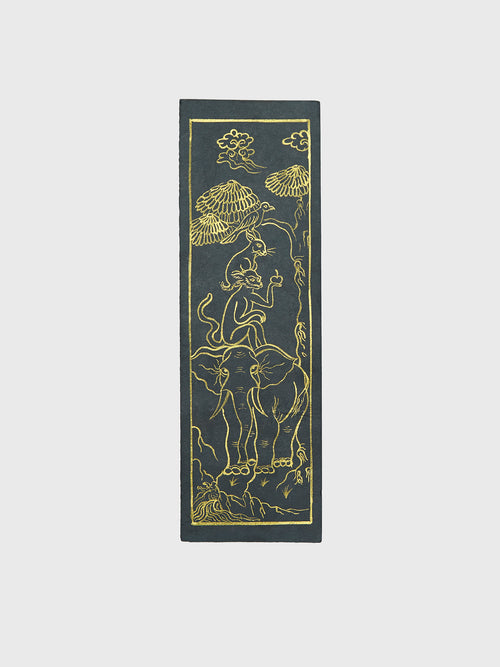
The Four Friends Blessing are a symbol of harmony. In ancient times, before the coming of Buddha, an elephant, a monkey, a hare and a grouse lived in the jungles of the kingdom of Kashinagar, which is in present day Varanasi, India. They decided that the source of happiness lay in the respect of others. For World Peace Day, the Four Friends reminds us of the strength of the collective in creating a world where all can experience boundless peace, enjoying the happiness that emanates from a world free of conflict. Be kind, be compassionate and peace will follow.This blessing is hand-painted in copper sand ink on black paper by Lhagon Kyap, a local painter who specialises in thangkas, Tibetan religious scrolls. *Please note that blessings can only be added to existing orders via the checkout, and cannot be purchased alone.
$50
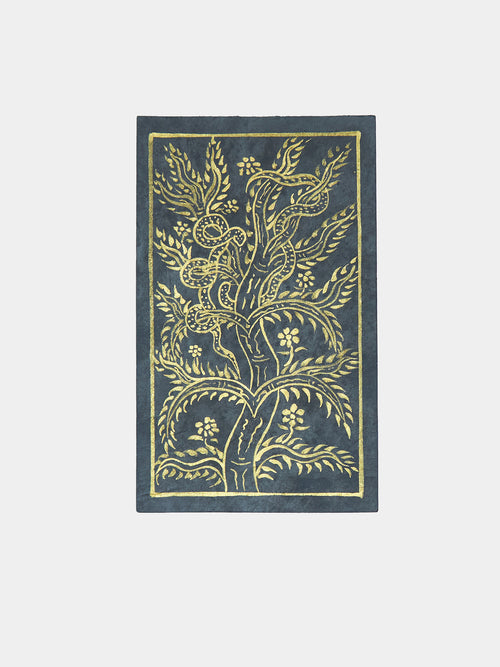
The Year of the Wood Snake is considered a good time for growth, creativity and introspection, said to attract good energies and luck – the Wood Snake associated with wisdom, intuition and renewal. The energy of the Snake is also related to transformation, as this animal sheds its skin to renew itself, a powerful symbol of personal and spiritual evolution. On the other hand, wood, as an element, is associated with stability and connection with nature. The combination of snake and wood creates a special synergy that is expansive and balanced, expressive and magnetic. This blessing is hand-painted in copper sand ink on black paper by Lhagon Kyap, a local painter who specialises in thangkas (Tibetan religious scrolls). *Please note that blessings can only be added to existing orders via the checkout, and cannot be purchased alone.
$50
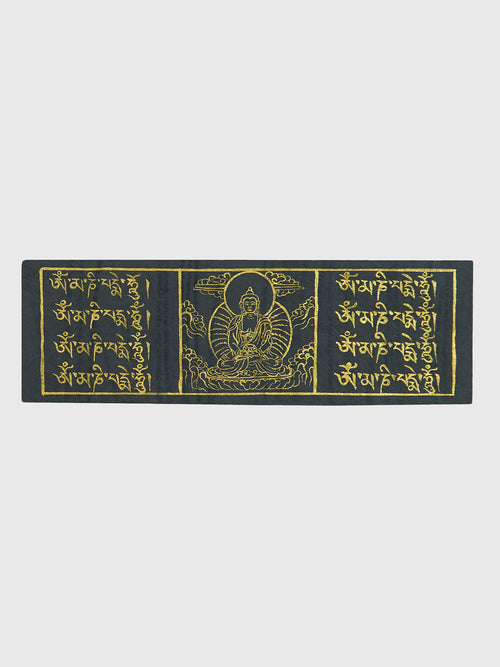
ཨོཾ་མ་ཎི་པདྨེ་ཧཱུྃ The Buddha Blessing depicts the most recited and ubiquitous of all Buddhist mantras, oṃ maṇi padme hūṃ. Oṃ maṇi padme hūṃ is a praise to the four-armed Avalokiteshvara (translated as ‘the lord who looks in every direction’ or ‘the lord of what we see’), the Buddhist deity of infinite compassion and mercy. The mantra invokes ‘the jewel in the lotus’, the jewel being the wish fulfilling gem (or cintāmaṇi), and the lotus representing purity. Either spoken aloud or sounded internally, the mantra is believed to create a connection to Avalokiteshvara and induce a higher level of spiritual awareness. This blessing is hand-painted in copper sand ink on black paper by Lhagon Kyap, a local painter who specialises in thangkas, Tibetan religious scrolls. *Please note that blessings can only be added to existing orders via the checkout, and cannot be purchased alone.
$50
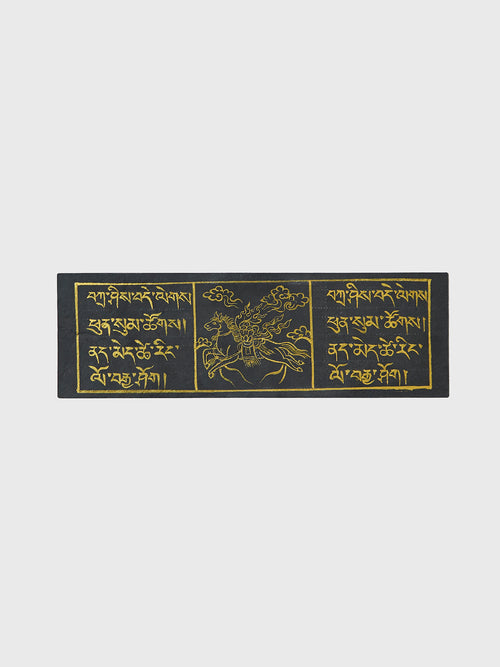
The New Beginnings blessings depicts a lungta (wind horse), which is a Tibetan symbol of good fortune. In Tibet, this blessing is often given to families at the time of a new birth, and reads: May these auspicious greetings See your spiritual and material wishes fulfilled And bring you a long and healthy life That will last a hundred years This blessing is hand-painted in copper sand ink on black paper by Lhagon Kyap, a local painter who specialises in thangkas (Tibetan religious scrolls). *Please note that blessings can only be added to existing orders via the checkout, and cannot be purchased alone.

$50
In Tibetan astrology, The Water Rabbit is considered the luckiest of all the zodiac animals. The Tibetan Lunar Calendar contains twelve zodiac signs, each of which carries its own meaning and significance. The Water Rabbit is spiritual and peace loving by nature and loathes any kind of aggression. They are compassionate, cautious, apt at resolving conflicts, calm and tactful. Hand-painted in copper sand ink on black paper by Lhagon Kyap, a local painter who specialises in thangkas, Tibetan religious scrolls. *Please note that blessings can only be added to existing orders via the checkout, and cannot be purchased alone.
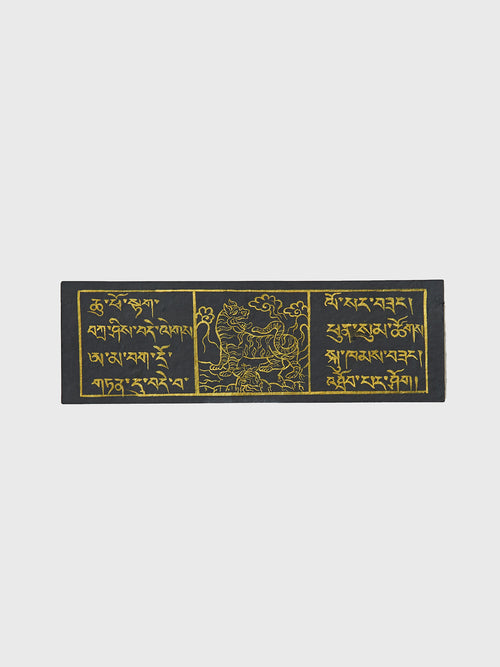
$50
In Tibetan astrology the water tiger, symbolises change, risk-taking and adventure. To celebrate, this blessing reads:In the year of the water tiger May these auspicious greetings Bring you lasting joy May this happy new year Fulfil your spiritual wishes And may you achieve good health This blessing is hand-painted in copper sand ink on black paper by Lhagon Kyap, a local painter who specialises in thangkas (Tibetan religious scrolls). *Please note that blessings can only be added to existing orders via the checkout, and cannot be purchased alone.
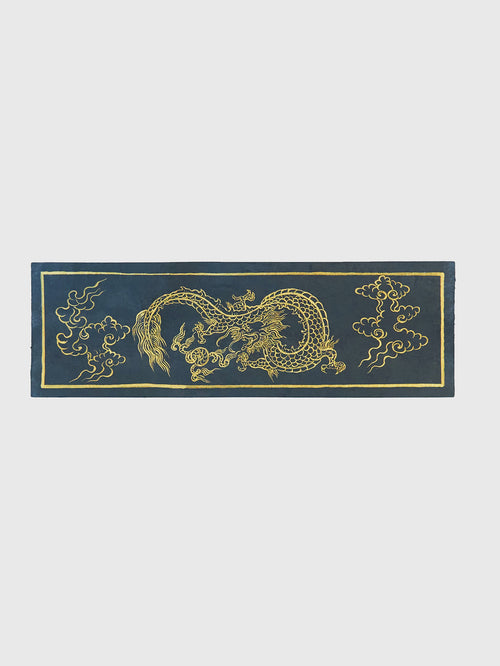
$50
In Tibetan astrology, the Wood Dragon is considered an auspicious creature who excels in many talents, symbolising power, honour, luck, and success, it is believed to bring about opportunity, change, and challenges. The Tibetan Lunar Calendar contains twelve zodiac signs, each of which carries its own meaning and significance. This blessing is hand-painted in copper sand ink on black paper by Lhagon Kyap, a local painter who specialises in thangkas, Tibetan religious scrolls. *Please note that blessings can only be added to existing orders via the checkout, and cannot be purchased alone.
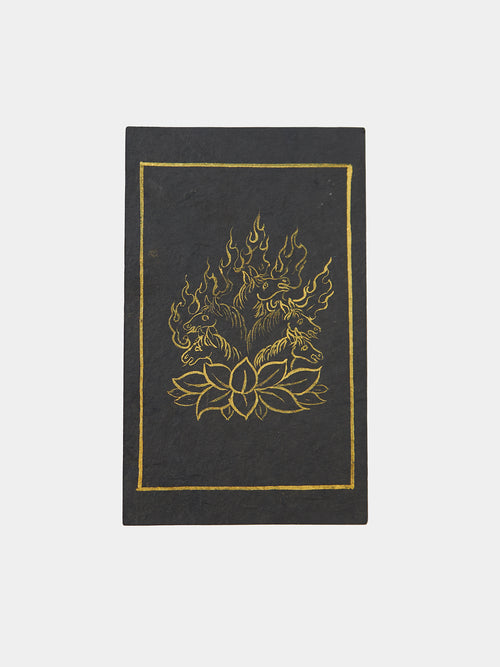
$50
Hand Painted Fire Horse blessing for this year's Lunar New Year. The Year of the Fire Horse is marked by restless, transformative energy—an amplification of the Horse’s natural drive, sweeping in the potential for bold change. It encourages progress and expansion, though navigating this surge demands wisdom and patience to channel productivity and temper volatility. This is considered an auspicious time for endeavors that call for physical strength and determination, inspiring people to break free from limitations and pursue their goals with renewed vigour. This blessing is hand-painted in copper sand ink on black paper by Lhagon Kyap, a local painter who specialises in thangkas (Tibetan religious scrolls). *Please note that blessings can only be added to existing orders via the checkout, and cannot be purchased alone.


2025
Norlha’s latest store opens in Sanlitun, Beijing. A new and transformed Norden Camp reopens for its first season.
2024

Norlha’s first showrooms in Paris. Norlha’s stockists expand across the world, including Dover Street Market, Mouki Mou, Andreas Murkudis. Norlha is featured in Vogue.
2023

Ritoma’s flagship store and showroom reopens, and Norlha launches its first official home collection.
2022

This year the nomad cooperatives who work closely with Norlha to source yak khullu discover the Golden Brown colour of fibre. Norlha creates its overfelt technique.
2021

Work begins on a new Ritoma flagship store, designed by architect Blake Civello. Norlha’s international reach expands, featured in magazines worldwide, including World of Interiors, WSJ and L’Officiel.
2020

The first ready to wear collection launches with Jo Cook as head designer.
2019

Sabrina Kraus López becomes Norlha’s Head of Creative.
2018

Norlha is awarded the B Corp certification, and filmmaker Ruby Yang launches her film Ritoma in Hong Kong. Norlha produces its first children’s collection, and organises its first scarf giveaway for Ritoma’s 80+ community for Sagadawa – beginning an annual tradition.
2017

Norlha celebrates its 10th anniversary, with 40 employees who have served Norlha since its beginning. Norlha develops its finest 100% yak khullu weave with 46 count thread. The Au Fil du Monde Norlha film by Isabelle Dupuy Chavanat and Jill Coulon is released in Europe.
2016

Norlha’s store in Lhasa is set up. Norlha’s carpet weaving centre at the atelier begins.
2015

Labrang’s Jamyang Zhepa, Ngawang Tsöndrü, whose first incarnation was the founder of Labrang monastery, visits Norlha atelier. Ritoma’s first showroom is opened.
2014

Norlha is established as a brand, launching the website open for orders. The Monk’s collection of traditional Tibetan wear is launched, and Norlha is featured in Elle Deco China.
2013

Norlha reaches 113 employees, 60% are women, and 95% are from Ritoma village. Norlha Guesthouse opens. Experts in felting from Finland and Italy come and work with Norlha’s felting section, sharing skills and techniques, a step in innovation was reached, combined with Tibetan traditional techniques.
2012

Norlha’s felting section is established, and a new wing is built for felting behind the workshop as felt trails begin. The first Norlha store in Labrang is set up.
2011

The advent of the internet arrives in Ritoma. The sewing section is set up and the first production of yak toys are made using upcycled materials, marking the beginning of the circular collection. Norlha adds Balmain, Lanvin, VisVim and Haider Ackerman to its Paris client list. Norlha’s first blanket collection is produced.
2010

Norlha’s first Hermes handwoven order. The atelier begins Norlha’s first hand-knitted pieces.
2009

Norlha’s first order comes from Sonia Rykiel; the first line of light yak and silk scarves are created, and Marie Claire comes to Ritoma to write a feature on Norlha.
2008

Spring arrives on the plateau, and Norlha presents its first products in Paris. Arnys make their first order for scarves, Torcello, for fabrics. The yak and silk weave is created through experimentation, where tensions of yak and silk create an innovative pleating effect.
2007

Training continues in Nepal, where hand spinning is learnt and the purchase of weaving equipment, looms and spinning wheels are sent by truck to Ritoma. By spring, first 10, then 30 recruits are hired and trained to spin and weave in tents. Norlha’s first products are made and work begins on the construction of the Atelier. Norlha’s first weave, the Nomad Classic, is created.
As summer unfolds, Norlha’s first picnic, a yearly tradition, begins. Experiments are made with threads, blending yak wool with silk, wool and cashmere. The first photoshoots are taken on the autumn grassland with artisans. In November, the atelier is ready. Blessed by monks from the local monastery, the tents are then dismantled. Moving in day, November 11th, becomes Norlha’s yearly day of celebration.
2006

Dechen and Kim visit Ritoma in summer to discuss plans for a workshop with the village. A building site at the entrance of the village is chosen. Months later, three people from the village alongside Dechen and Yidam go to Cambodia and train in weaving.
2005

Exploring and discovering yak fibre. Dechen returns to Gannan, working with local nomads to source yak wool. She purchases it from nomad families in Ritoma and Machu, whom she had met the previous year. The raw fibre is dehaired at the base of the Plateau, then sent from Lhasa to Kathmandu in a truck, where the fibre is handspun, then woven into shawls on hand looms.
2004

Dechen’s first location trip to the Plateau. Visiting Ritoma, walking around what back then was a very quiet village, she had her first night in a nomad’s tent.